








Integration with multiple Public Administrations and management systems
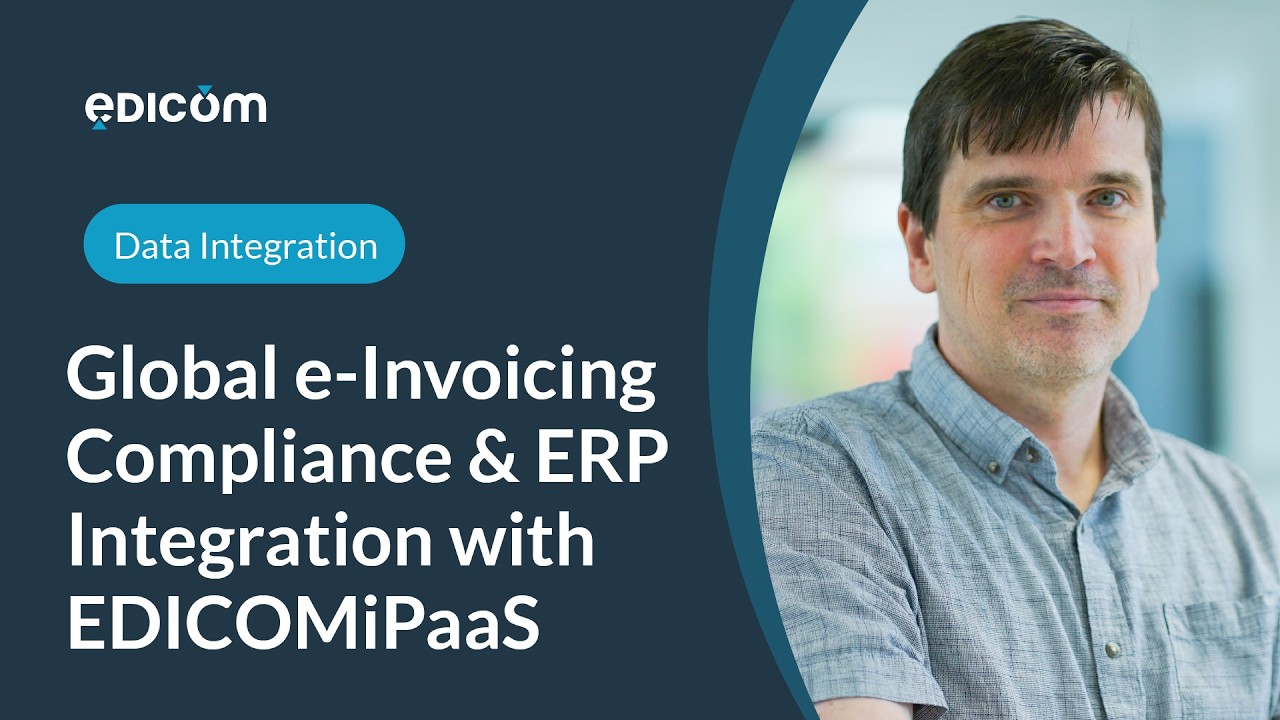
Operating in 10, 20, or 50 countries means managing multiple ERPs, CRMs, and local solutions, while complying with electronic invoicing and tax reporting rules that vary by jurisdiction. EDICOMiPaaS acts as a cloud orchestration layer that connects all your systems, standardizes formats, and automates data flows with public authorities and business partners, providing a consolidated, real-time view across the entire organization. The result: fewer silos, fewer errors, and globally consistent critical data.
Common challenges we solve
Multiple ERPs and custom developments: SAP, Oracle, Dynamics, or legacy systems with distinct data models that “don’t speak” to each other. EDICOMiPaaS integrates cloud, on-premise, and legacy environments, applying transformations and business rules for frictionless information flow.
Multi-country e-Invoicing and tax reporting compliance: secure, traceable channels for issuing, receiving, and archiving electronic documents in line with local requirements, with monitoring and alerts for immediate action.
Scaling and data exchange peaks: elastic infrastructure with 99.9% SLA, 24/7 operations, and international support to ensure business continuity.
Key benefits for multinational organizations
Real-time visibility and full traceability: graphical dashboards to track processes, messages, and statuses by country, channel, and application.
Lower operational costs and fewer errors: automated exchanges between ERPs, eCommerce, marketplaces, logistics, and public administrations, without duplication or manual tasks.
Data governance and security: encryption, auditing, and international certifications (ISO 27001, ISO 20000) supporting both processes and infrastructure.
Global scalability: add countries, integrations, and regulatory requirements without reworking your architecture, the platform scales with you.
Integration with supply chains and major retailers
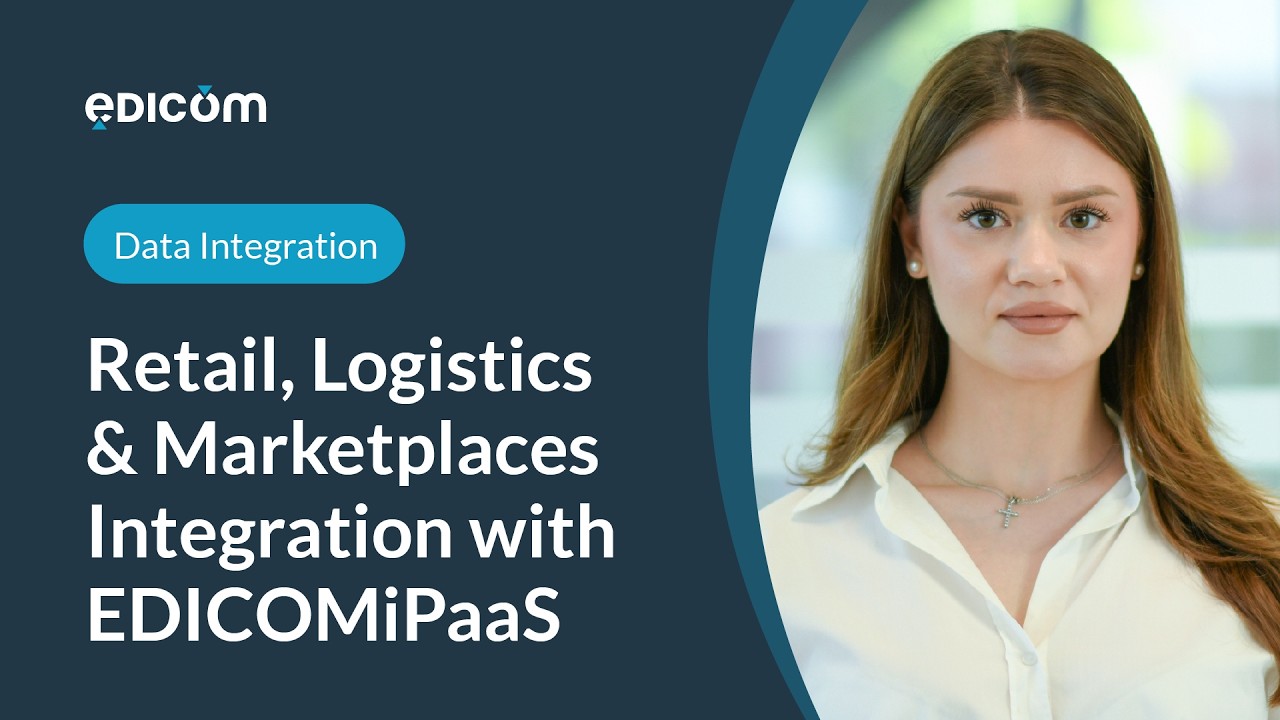
Relationships with top-tier retailers and logistics operators demand fast, reliable data exchanges. EDICOMiPaaS ensures seamless information flow with these partners, whether via EDI, API, or hybrid models. We standardize messages, orchestrate end-to-end processes, and provide real-time visibility across purchasing, operations, and finance. The result: a more efficient supply chain and better end-customer service.
Common challenges we solve
Retail EDI/GS1 requirements: support for standards (EDIFACT, ANSI X12), GTIN catalogues and codes, SSCC/GS1-128 labels, and key documents (ORDERS, ORDRSP, DESADV/ASN, INVOIC, IFTMIN), fully aligned with each retailer’s specifications.
Multi-protocol and secure connectivity: AS2/AS4, SFTP, VAN, REST/GraphQL APIs, and B2B portals with monitoring and automatic retries.
Heterogeneous 3PL, WMS, and TMS systems: integration with warehouses and carriers (shipping notices, dock scheduling, tracking), synchronized with ERP/OMS for real-time availability.
Chargeback prevention: pre-validations (dates, quantities, EAN/UPC, packaging, palletization) and business rules to ensure OTIF and delivery window compliance.
Marketplace & retail media: reconciliation of Vendor/Seller orders, pricing, inventory, and invoicing, unifying feeds and APIs into a single data model.
Key benefits for manufacturers and distributors
Fewer incidents and penalties: accurate ASNs and labels on the first try, reducing rejections and chargebacks.
End-to-end visibility: traceability by order, shipment, parcel, and SSCC; KPIs for fill rate, OTIF, and cycle times.
Faster time-to-shelf: quicker order approval, preparation, and dispatch through automated workflows.
Commercial scalability: fast onboarding of new retailers/3PLs and expansion to new countries without redoing integrations.
Cleaner financial closing: automated order–shipment–invoice reconciliation and discrepancy handling.
Unified online sales channels and marketplaces
We connect online stores with global marketplaces and logistics operators to synchronize inventory, pricing, orders, invoices, and returns in real time. This ensures a consistent customer experience across all channels while giving your company control and traceability across its entire digital sales network (D2C, B2B, and B2C). Intelligent stock reservation and anti-overselling rules help reduce cancellations. We unify tracking and order–shipment–invoice reconciliation, integrating e-Invoicing and fiscal compliance by country.
Common challenges we solve
Desynchronized inventory between eCommerce, marketplaces, ERP, and warehouses (WMS/3PL), causing stockouts or overselling.
Divergent catalogues and prices per channel/country (attributes, images, taxes, promotions).
Heterogeneous order flows: Vendor, Seller, Fulfilled by merchant, or Drop Ship models.
Disconnected returns/RMA processes impacting customer service and accounting.
Multi-country invoicing and compliance (e-Invoicing, e-Reporting, certified e-archiving) for cross-border sales.
Key benefits
True omnichannel operation: a single source of truth for stock, pricing, and orders across all sales channels.
Fewer incidents and cancellations: anti-overselling rules, stock reservations, and ETA updates.
Higher conversion and margin: synchronized pricing/promotions, channel repricing, and lower operational costs.
Superior customer service: unified tracking, streamlined returns, and consistent communication by channel and country.
Cleaner financial closing: automated order–shipment–invoice–payment reconciliation.
Integration of proprietary applications
Connect and orchestrate your entire internal application ecosystem: ERPs, CRMs, BI, MDM, MES, HRIS, custom developments, or microservices, without rebuilding what already works. EDICOMiPaaS acts as an integration and governance layer that unifies data and events between on-premises and cloud applications, normalizes formats, and executes business workflows in real time. The result: fewer silos and an architecture ready to scale.
Common challenges we solve
Heterogeneous and legacy environments: multiple stacks, databases, and incompatible data models.
Fragile point-to-point integrations: hard-coded links that break with every change or release.
Duplicates and misaligned master data (customers, products, pricing, taxes, locations).
Low observability: hard to trace what failed, where, and why.
Fragmented security: inconsistent authentication, authorization, and audit controls.
Key benefits
De-coupled architecture: move from ad-hoc integrations to a centralized API and event-driven model.
Consistent data: synchronized master data (MDM) and unified data quality policies across the company.
Business agility: easily plug in new apps or microservices that inherit existing workflows, rules, and security.
Operational efficiency: less maintenance, fewer incidents, and reduced MTTR thanks to end-to-end traceability.
Built-in compliance and security: encryption, auditing, and access controls (SSO, OAuth2/OIDC, RBAC).

