
EDI Standards
EDI standards are the key elements of Electronic Data Interchange.
Introduction to electronic data interchange (EDI) standards
Electronic data interchange (EDI) is a fundamental technology for managing electronic business documents in modern B2B and B2G operations. This technology enables information and business documents to be shared between companies in a digital, standardized, and secure way. In fact, EDI has marked a turning point in commercial relations in many economic sectors, replacing paper-based processes with real-time automated exchange.
As a result, more and more companies and even public administrations are implementing EDI solutions to streamline their business transactions and communications. Next, we will explore the EDI standards, why they are so important, the main global standards, their advantages, applications by sector, and an illustrative success case in the retail sector.
What are EDI standards and why are they so important?
EDI standards are common languages that define how to structure and exchange electronic documents such as invoices, orders, or shipping notices within the digital supply chain. In essence, the standard language is what defines the electronic data interchange, and the development of common standards allowed this technology to emerge and develop globally. Prior to the standards, the diversity of systems and formats made electronic transactions between companies difficult. Standardization solved this problem, allowing both sender and recipient to "speak the same language," regardless of their technology platforms.
There are different types of EDI standards in the world. Some were created for specific industries and others have been extended to multiple sectors. Without these unified standards, each company would have to adapt to proprietary formats of its partners, making large-scale automation unfeasible. EDI standards establish what information must be included in each type of document, the order and format of the data, and even the precise meaning of each field. This ensures correct interpretation of the information by both parties, thus minimizing errors and facilitating international interoperability.
In short, EDI standards are important because they ensure interoperability. They constitute a "common language" that allows companies of all sizes and industries to exchange documents reliably and automatically. Without this standardization, the true benefit of EDI—efficient, agile, and error-free communication—would not be possible on a global scale.
Types of EDI standards most widely used in the world (X12, EDIFACT, UBL, ODETTE)
Numerous EDI standards have been developed over the decades. The following is a description of the main EDI standards used worldwide, many of which are still current and evolving:
ANSI ASC X12
Created in 1979 by the American Standards Institute (ANSI), it is considered the first commercial EDI standard. Today it is used by some 300,000 companies worldwide, with widespread adoption in the United States. It defines hundreds of transactions for industries such as retail, finance, transportation, healthcare, etc., and is the predominant EDI language in North America.
UN/EDIFACT
It emerged in the 1980s under the auspices of the UN (UN/Working Party 4 working group) to create an international, multi-country, and multi-industry standard. EDIFACT (Electronic Data Interchange for Administration, Commerce, and Transport) was adopted early in Europe, where it became the most widespread EDI standard. Its messages (ORDERS, INVOIC, DESADV, etc.) meet the needs of various sectors globally.
UBL (Universal Business Language)
Created in 1998 by specialist Charles Hoffman, UBL is based on the XML language and was initially created for the financial sector. It is an open standard for electronic documents (purchase order, invoice, etc.) designed for the Internet. Its flexibility and modular nature have led the European Union to designate UBL 2.1 as the reference standard for e-procurement in its 2020 strategy. Currently, UBL is driving many government and B2B electronic invoicing initiatives because of its ability to adapt to local tax requirements.
ODETTE
Developed by the European association of the same name, the ODETTE standard (and its OFTP protocol-linked messages) was created specifically for the automotive industry. EDI is indispensable in the automotive sector to enable systems such as just-in-time with geographically dispersed suppliers. ODETTE, together with the OFTP2 protocol, is widely used by European automobile manufacturers to exchange production orders, shipping notices, transport logistics, etc.. Its sector-specific approach ensures that parts and components flow through the supply chain without interruption.
These are just some of the most commonly used EDI standards in use today. It is worth mentioning that there are other historical or regional languages, such as VDA (used in the German automotive industry) or TRADACOMS (used in the UK prior to the adoption of EDIFACT), as well as modern XML/JSON-based variants driven by local requirements. However, the above-listed standards serve the vast majority of exchanges globally. Thanks to them, a manufacturer can send an order from its ERP and a retailer in another country can interpret it correctly in its system, all in an automated way. In an increasingly globalized world, the use of common standards is essential to achieve seamless and interoperable communication between companies, regardless of their industry or location.
Advantages of using EDI standards
Implementing electronic data interchange solutions offers strategic benefits such as process automation, fewer errors in electronic documents, and increased supply chain efficiency. Standardization ensures that both parties understand the messages, resulting in numerous savings and improved efficiency. The main advantages of using EDI and its standards include:
Process automation
The use of EDI eliminates manual tasks such as printing, paper management, mailing, or manual data entry in the ERP. Many processes that used to require human intervention now occur unattended. This drastically reduces the administrative burden and speeds up operations. For example, an electronic invoice can be automatically created and sent in seconds, without the need for a person to physically prepare and send documents.
Faster response times
With EDI, document exchange cycles are performed in near real time. Studies indicate that administrative and operational processes can shorten their response times by around 61% thanks to automation. An EDI order travels from buyer to seller in seconds, enabling faster confirmation and shipment of goods. The resulting speed improves the supply chain and service to the end customer.
Error minimization
EDI solutions reduce between 30% and 40% of errors in commercial documents. Using standards known to both parties prevents misinterpretation of data due to differences in format or language. In addition, common manual process errors are eliminated: erroneous transcriptions, duplicate typing, loss of documents, or confusion in telephone orders. The quality of information improves significantly, increasing the accuracy of inventories, invoicing, and payments.
Reduction of operating costs
This is perhaps the most obvious benefit. Migrating from paper to electronic transactions reduces paper, printing, storage, and shipping costs, as well as the cost of employee labor dedicated to manual tasks. It is estimated that business document processing costs are reduced by at least 35% with an EDI solution, and in the case of electronic invoicing the savings can be as high as 90%. Automation also avoids costs associated with delays and errors (penalties, returns, reprocessing), generating a very positive financial impact.
Increased productivity
By streamlining and automating the flow of documents, EDI makes it possible to handle a greater volume of operations with the same resources. Teams can focus on higher value-added tasks rather than repetitive data entry tasks. In other words, it increases productivity by freeing up worker time and optimizing processes. A company can scale its business without the need to grow linearly in administrative personnel.
Full integration with business partners
EDI standardization facilitates the incorporation of all partners in the supply chain, from suppliers to customers, into a single exchange platform. This improves overall business relationships, as communication flows seamlessly between any partner or system, regardless of its platform. A well-implemented EDI ecosystem integrates large and small partners, eliminating technological barriers and ensuring that everyone "speaks" the same data format.
Information visibility and traceability
By replacing paper with electronic documents, it is much easier to monitor the status of transactions in real time. EDI platforms provide acknowledgment of reception and tracking for each message (confirmation of orders received, delivery notification, invoice acceptance, etc.), offering complete traceability. For example, a buyer can know when their order was shipped, received, and processed, all in a transparent manner. In addition, when the exchange is done through secure networks (private VANs), message status are permanently monitored (if they were delivered, read, rejected, etc.). This visibility makes it possible to react quickly to any incident in the chain.
Improves customer service
EDI implementation usually results in more agile and reliable processes, which ultimately benefits the end customer. For example, in retail, EDI helps to avoid stock-outs and to meet delivery deadlines with greater precision, resulting in shelves that are always stocked and satisfied customers. Closer synchronization between production, logistics, and sales (made possible by real-time data exchange) allows companies to better respond to demand, increasing service quality.
Financial optimization
An important consequence of EDI automation is improvement in financial and cash flow indicators. Issuing and receiving electronic invoices immediately and automating their validation and reconciliation helps shorten collection and payment cycles. Buyers can take advantage of early payment discounts thanks to the visibility of their obligations, and suppliers improve their cash flow by reducing payment delays. Overall, this provides financial strength and helps manage working capital.
EDI standards applied by sector
EDICOM offers EDI solutions for different sectors, adapting standards, protocols, and applications according to the specific characteristics of each industry. The following is a detailed description of how these standards are applied in representative sectors, based solely on what EDICOM publishes.
Retail (commercial distribution)
Common messages: EDI in retail allows for the exchange of messages such as purchase orders, invoices, product catalogs or product information, shipping instructions, and price catalogs between manufacturers, distributors, and retailers.
Multi-standard and multi-protocol: EDICOM's EDI platforms support multiple standards (e.g., EDIFACT, X12, UBL, TRADACOMS, XML EDI) in order to adapt to the requirements of different trading partners and markets.
Automation and connectivity: The integration of all trading partners is supported by a global B2B platform, which operates in SaaS mode and allows connecting with retailers in different countries, managing electronic documents according to the specifications of each country or partner.
Operational improvement: The solutions help optimize inventories, avoid stock-outs, synchronize product catalogs, and forecast demand, thanks to the use of standardized messages and up-to-date information between manufacturers and distributors.
Automotive
Specific standard: In the automotive sector, EDICOM works with the ODETTEstandard, which was specially designed for the needs of the European automotive industry.
Communication protocols: One of the key protocols is OFTP/OFTP2, used for secure communications between manufacturers and suppliers, including transmission of large technical files such as CAD/CAM. OFTP2 incorporates improvements in security, stability, and communication over IP networks.
Integration of critical messages: ODETTE standard proprietary messages are used for delivery planning (Delivery Forecast/DELINS), Just-in-Time scheduling, dispatch advice (Dispatch Advice/AVIEXP), invoicing (INVOIC) and logistics and inventory reporting. This supports precise operations between OEMs (manufacturers) and their suppliers (TIER1, TIER2, etc.).
Finance/taxation/public administrations
Electronic Invoice: EDICOM provides services that comply with the legal requirements for electronic invoicing in different countries, adapting formats according to national regulations and internationally accepted standards. Although not all the technical details of the specific standards appear in the public sections, the ability to handle invoices, tax reports, orders to suppliers, etc. is mentioned.
Regulatory compliance: EDICOM solutions ensure that the electronic documents exchanged comply with the tax, legal, and reporting requirements of each country where they operate, including data adaptation, legal formats, electronic signatures, document archiving, etc.
Other sectors/cross-cutting application
EDICOM also indicates that EDI standards are used in various sectors such as logistics, healthcare, and transportation, where document exchange needs (orders, delivery notes, shipping notices, invoices, inventory reports) are common. In all these sectors, the same main standards (EDIFACT, X12, UBL, etc.) and appropriate protocols are applied to ensure the reliability, security, and traceability of messages.
Success case of EDI in retail: how Heineken Mexico automated its supply chain
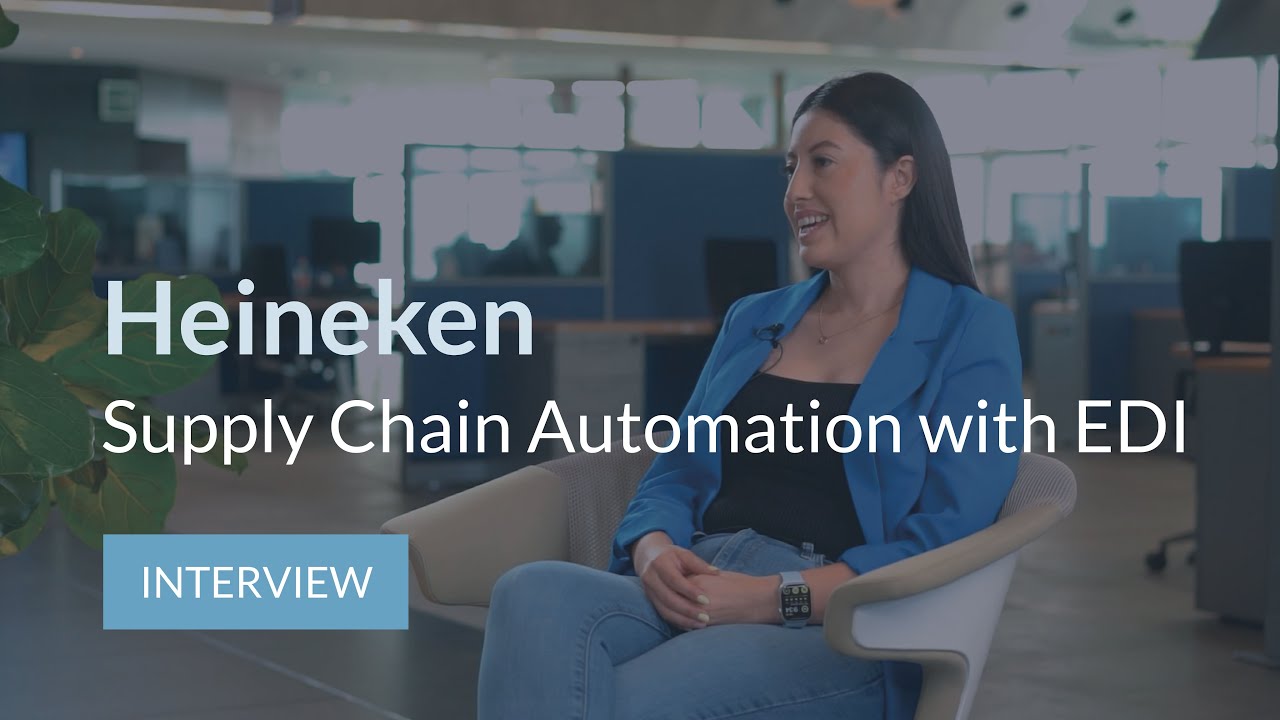
One illustrative example of how EDI adds value in the retail sector is Heineken Mexico, which implemented a project to automate its commercial chain through EDI. It succeeded in integrating its main trading partners through an EDI platform, optimizing the management of purchase orders and consolidating more efficient and scalable operations.
Concluding thoughts on EDI standards: the key to global B2B communication
In an increasingly digital and globalized business environment, EDI standards play a critical role as enablers of integration between trading partners. They enable companies of different sizes, industries, and countries to exchange business documents automatically, reliably, and securely. Throughout this document we have seen that EDI is not just another technology, but a pillar of modern operational efficiency: it streamlines processes, reduces costs and errors, and improves the competitiveness of organizations.
Examples of industry applications (from retail to automotive to healthcare to finance) make it clear that EDI has become synonymous with good logistics and administrative practices. Sectors such as retail could hardly handle today's scale of operations without a standardized language such as EDIFACT/EANCOM; the automotive industry could not sustain global just-in-time models without EDI networks; and the public sector relies on electronic standards for transparency and savings in procurement. When a company delays adopting EDI, it is often a matter of time before some external requirement (a major customer or a government) forces it to do so. But beyond the pressures, it is the inherent advantages themselves that justify implementing EDI: those who have done so report substantial improvements in their performance indicators.
Ultimately, EDI standards and electronic data interchange are the backbone of efficient B2B integration and the digitization of global supply chains. Its use provides a universal language for business, analogous to what was once the standard container for global trade: a common basis that simplifies and accelerates exchange. Companies that invest in EDI not only meet partner or regulatory requirements, but gain agility, visibility, and responsiveness in their day-to-day operations. As the EDI Academy nicely summarizes, EDI adoption brings organizational changes, but in the medium term it brings numerous advantages—from lower costs to increased productivity—that make the company more competitive and ready for new technological challenges. Therefore, understanding and leveraging EDI standards is no longer optional, but strategic for any company seeking to thrive in the interconnected digital economy.
EDI cannot be understood without standards, as they are the key to electronic data interchange between trading partners, regardless of language or geographic barriers. However, with the development of integration technology, large EDI vendors have become more sophisticated in their data structure mapping tools, being able to translate and interpret any data schema for agile integration into any information system.
However, standards are still fundamental because they are embodied in data files that contain the essential information that companies, administrations, and even consumers are waiting to receive. They continue to set the standard in electronic communication.
Continue your learning in EDI and Compliance!
Webinars, Success Stories, Guides, Reports… Here you will find all our premium content.
 Webinar
 Video
VideoSubscribe to our newsletter
Sending
Please wait. This may take several seconds.