
Electronic invoicing: what it is and why it is key to the digital economy
Electronic invoicing is a legal and fiscal substitute for paper invoices that provides special security features to guarantee integrity and authenticity.
Electronic invoicing is an essential tool in the digital transformation of businesses and public administrations. It goes far beyond replacing paper with a digital file: it redefines the way transactions are managed, improves the traceability of processes, and strengthens tax compliance. In this context, electronic invoicing has become a fundamental element in ensuring efficiency, transparency, and control in the global economy.
Today, more than 80 countries have established regulations governing the use of electronic invoicing. In many of them, its adoption is already mandatory for all commercial transactions. This change not only responds to the need to control tax evasion, but also to the search for more sustainable and competitive business models.
What makes a digital invoice an electronic invoice?
For an invoice to be valid for tax purposes, it must meet a series of technical, legal, and security requirements that guarantee its authenticity and integrity:
Structured format: The information must be presented in a standardized electronic format (XML, UBL, EDIFACT, Facturae, JSON, etc.) that can be read by automated systems. This allows the invoice to be integrated with ERP systems and its processing to be automated. PDFs or scanned files do not meet this requirement, as they do not contain structured data.
Electronic transmission: The invoice must be transmitted between systems automatically and securely, using protocols such as AS2, HTTPS, SFTP, or Web Services. In many countries, this transmission also involves prior validation by the tax authorities.
Authenticity and integrity: These are ensured by cryptographic mechanisms such as electronic signatures, digital certificates, or time stamps. These guarantee that the document has not been modified and that the issuer is verifiable.
Compliance with these principles makes the electronic invoice a document with full legal and probative validity, capable of completely replacing its paper version.
Evolution and expansion of electronic invoicing
Electronic invoicing began as a tool to optimize companies' internal administrative processes, but quickly became a fiscal strategy with national and, today, global reach. Its widespread adoption began in the early 2000s in Latin America, where governments sought to reduce tax evasion and monitor economic transactions in real time. Countries such as Mexico, Brazil, and Chile were pioneers in implementing continuous control models, serving as a reference for other regions of the world.
In Europe, the evolution has followed a more gradual path, driven by EU directives that promote the harmonization of processes and interoperability between countries. Initiatives such as ViDA (VAT in the Digital Age) and the use of networks such as Peppol are accelerating the transition to a model of mandatory electronic invoicing and digital reporting in the coming years.
In other regions, such as Asia and Oceania, electronic invoicing has found its place in hybrid frameworks that combine automatic validation and periodic reporting. Meanwhile, in North America and Africa, adoption continues to advance through voluntary or gradual projects focused on the digitization of accounting records.
The result of this global expansion is a process of convergence: more and more countries are moving toward connected, real-time systems, where tax information flows automatically between companies and administrations.
Electronic Invoicing in Spain
Electronic invoicing in Germany
Electronic invoicing in Greece
Electronic invoicing in Poland
Benefits of electronic invoicing
Electronic invoicing not only generates operational efficiencies, but also enhances transparency and auditability for organizations. By centralizing and digitizing tax records, it facilitates transaction tracking, reduces fraud, and improves the overall traceability of tax information.
Beyond regulatory compliance, electronic invoicing offers significant advantages for businesses and administrations:
- Efficiency and automation: The processes of issuing, receiving, validating, and archiving are performed automatically. This reduces manual errors and speeds up accounting and administrative management.
- Cost and time reduction: The cost of issuing, sending, and receiving invoices is drastically reduced compared to traditional systems. Collection times are shortened and liquidity is improved.
- Security and global compliance: Signature and encryption mechanisms guarantee the authenticity and integrity of each document. In addition, certified solutions enable compliance with audit and retention requirements in multiple jurisdictions.
- Transparency and traceability: Tax authorities can monitor transactions more effectively, while companies gain a unified and accurate view of their billing flows.
- Sustainability and responsible digitization: Each electronic invoice avoids the use of paper, ink, and physical transport, contributing to the reduction of the corporate carbon footprint.
The future: interoperability and continuous control
International convergence in electronic invoicing is giving rise to an increasingly aligned global ecosystem. Emerging regulatory frameworks in Europe, such as e-reporting in France and Portugal, anticipate the evolution towards systems where validation, submission, and tax reporting will be fully integrated in real time. These initiatives reflect the influence of the ViDA plan, which seeks to harmonize VAT obligations and digitize taxation across the European Union.
The future of electronic invoicing is marked by interoperability and real-time information exchange. Models such as European Digital Reporting Requirements (DRR) or e-reporting and electronic invoicing platforms harmonized under international initiatives are moving towards a common framework that will facilitate cross-border trade and the complete automation of tax processes.
The Peppol standard continues to expand as a model of international interoperability, ensuring secure connections between companies and administrations in different countries. These initiatives promote a more transparent, connected, and efficient global environment.
Electronic invoicing, therefore, becomes the starting point for business automation: its adoption allows for the integration of advanced analytics, automatic reconciliation, and risk control tools, improving decision-making and competitiveness.
VAT in the Digital Age (ViDA) Explained: How Should You Prepare
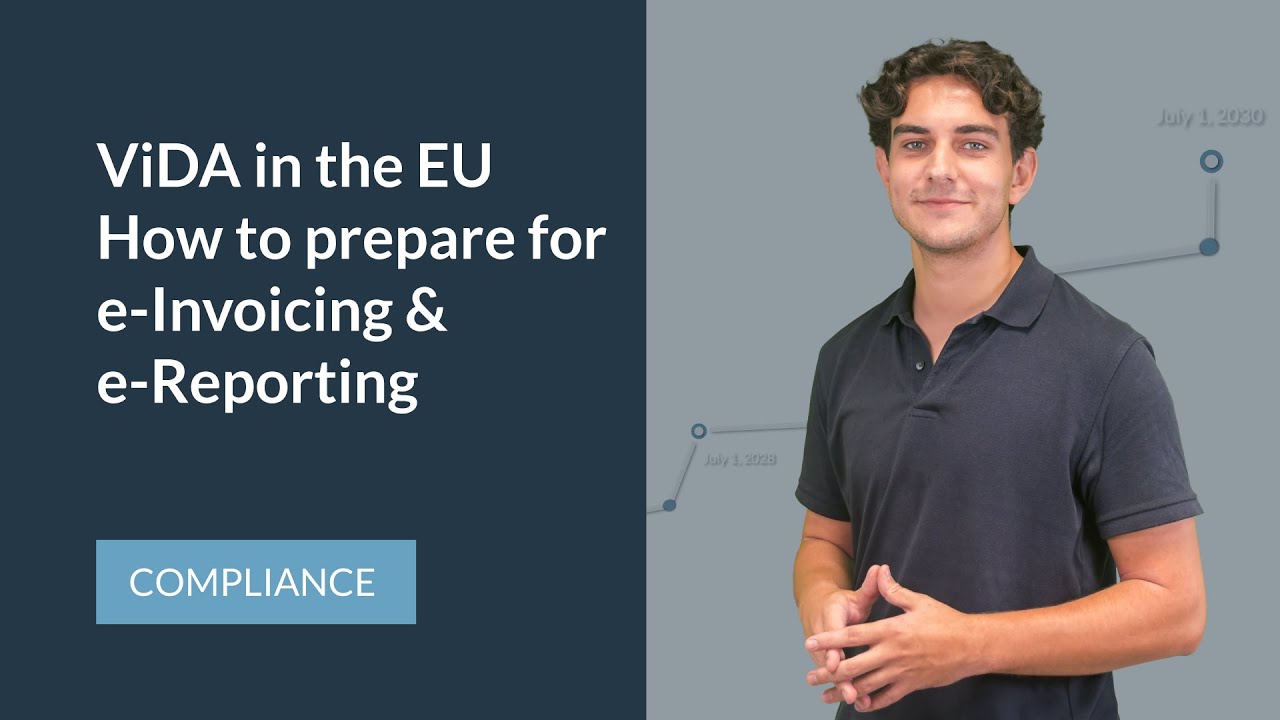
The role of electronic invoicing in EDICOM projects
For more than two decades, EDICOM has been developing electronic invoicing solutions adapted to the regulations of more than 80 countries. Its SaaS platform allows for the secure automation of the issuance, validation, signing, sending, receiving, and storage of invoices in accordance with the legal requirements of each jurisdiction.
Implementing a global electronic invoicing solution not only ensures regulatory compliance, but also brings efficiency, visibility, and scalability to business processes. Tax digitization, led by electronic invoicing, represents a strategic step towards the smart and connected enterprise.
Continue your learning in EDI and Compliance!
Webinars, Success Stories, Guides, Reports… Here you will find all our premium content.
 Webinar
 Video
Video
Subscribe to our newsletter
Sending
Please wait. This may take several seconds.